
The Carnival of Mazatlán: over a century of history
From a soldiers' protest that turned into a celebration in 1827 to the committee that first organized it in 1898, the Carnival of Mazatlán is, according to Mexico's Secretaría de Cultura, the oldest formally organized carnival in the country.
Published: September 11, 2026
A gathering in 1827
The oldest documented record of the Carnival of Mazatlán dates to February 12, 1827, when a group of soldiers stationed at the port organized a "convite, mascarada y comparsa" — a gathering, masquerade and procession — that began as a protest over unpaid wages and ended as a festive celebration. For much of the nineteenth century the celebration remained a spontaneous one organized by the port's own residents, with no formal structure.
The 1898 committee
The shift to an organized carnival came in 1898, when a civic committee took charge of the festivities and held the first formal procession on February 22 of that year, with decorated floats and a "king of folly" — Gerardo de la Vega — chosen to preside over it. According to Mexico's Secretaría de Cultura, this change made Mazatlán's carnival the oldest formally organized carnival in the country. The first carnival queen, Wilfrida Farmer, was crowned in 1900; between 1925 and 1928 the Juegos Florales, literary competitions, were added to the festivities, giving the carnival a cultural dimension beyond its parades; and in 1968 an official children's carnival was established within the calendar.
Music, floats, and the Centro Histórico
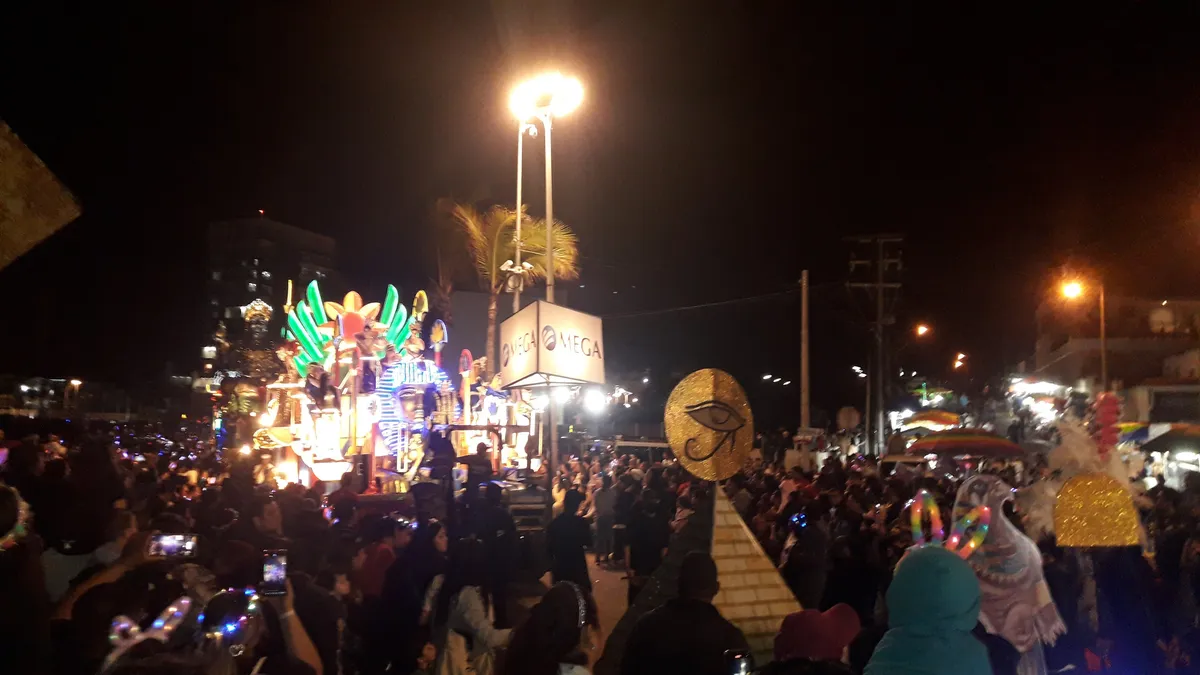
The carnival runs for the five days preceding Ash Wednesday, culminating in a parade of allegorical floats along the Olas Altas and Claussen waterfront promenades, in the city's Centro Histórico. A distinctive feature of Mazatlán's carnival is the central role played by Sinaloan wind bands and tambora music, present at most of the carnival's events. The large, elaborately built floats seen today — inspired by Valencia's Fallas — only began to be built in the 1990s; before that, the parade was more modest in scale. The old Teatro Ángela Peralta, in the heart of the Centro Histórico, served for much of its history as a carnival ballroom, before its restoration as a theater venue.
Related topics
- History
- Music
Related to this story
Sources and data
The information in this story comes from public sources.
- Carnaval en Mazatlán — Patrimonio Cultural Inmaterial de México — Secretaría de Cultura (Sistema de Información Cultural)
- Historia del Carnaval — Carnaval Internacional de Mazatlán — Carnaval Internacional de Mazatlán