
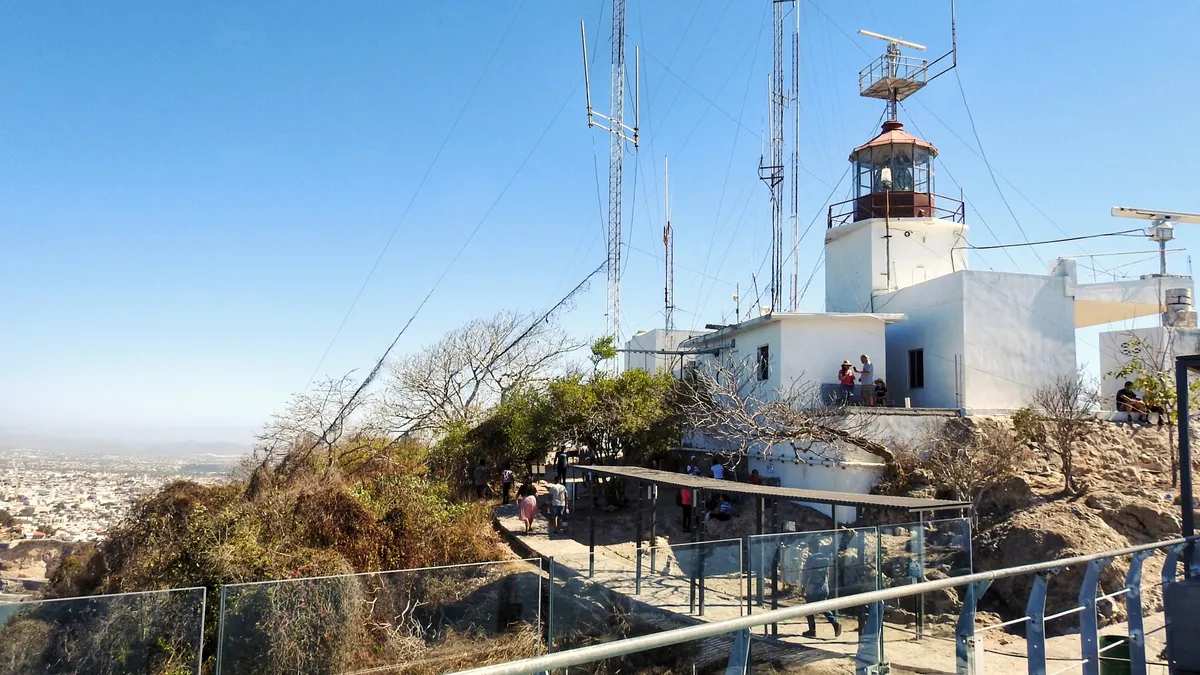
Mazatlán
A city and port in southern Sinaloa on the Gulf of California, known as "the Pearl of the Pacific". It is one of the state’s two deep-water ports and its main cruise and tourism port, with one of Mexico’s largest fishing fleets and an established beach-tourism centre.
Image: Dennis Sylvester Hurd · Wikimedia Commons · Dominio público
Key facts
- Municipal seat
- Mazatlán · City
- Population
- 501,441 · 2020
- Occupied dwellings
- 152,884 · 2020
- INEGI code
- 25012
Overview
The seat, the city of Mazatlán, sits at the foot of the Sierra Madre Occidental where it meets the Pacific. The port handles cargo and cruise passengers and is home to a large shrimping fleet.
The Centro Histórico, with its nineteenth-century architecture around Plazuela Machado and the Teatro Ángela Peralta, has been protected by federal decree as a zone of historic monuments since 2001. The city also has a long seafront promenade, the beaches of the Zona Dorada, the lighthouse on Cerro del Crestón and a carnival with nineteenth-century roots.
History
The town grew out of its port: opened to deep-sea trade around 1820 and, from 1828, the seat of the region’s maritime customs house, Mazatlán became one of the leading commercial centres of the northwest during the nineteenth century. Maritime trade and foreign merchant houses — Germans in particular — shaped what is now the historic centre.
In the twentieth century the port established itself as a fishing and industrial base and, later, as a tourism destination. The Carnaval de Mazatlán, descended from nineteenth-century masquerades, is today one of the oldest and best-attended in Mexico.
Geography
The municipality lies in southern Sinaloa, near the Tropic of Cancer, in the transition between the sierra and the coast. Hills and islands rise off the city — Isla de la Piedra, Isla de los Venados — and estuaries and river mouths open along the shore, including those of the Presidio and Quelite rivers.
The climate is warm and sub-humid with a pronounced dry season; Pacific cyclones can reach the coast between summer and autumn.
Cities and localities
Municipal seat
Featured localities
- El Quelite · 1,455 residents (2020)
Other localities
- Villa Unión · 16,934 residents (2020)
- El Walamo · 3,550 residents (2020)
- El Castillo · 2,613 residents (2020)
- El Roble · 2,314 residents (2020)
- Barrón · 1,994 residents (2020)
- CERESO · 1,223 residents (2020)
- El Habal · 1,146 residents (2020)
- Escamillas · 991 residents (2020)
- Siqueros · 968 residents (2020)
The municipality contains 704 localities on the INEGI register.
Related places
Related gastronomy
Related topics
- Tourism
- Ports
- Pesca / Fisheries
- History
Related stories
 History
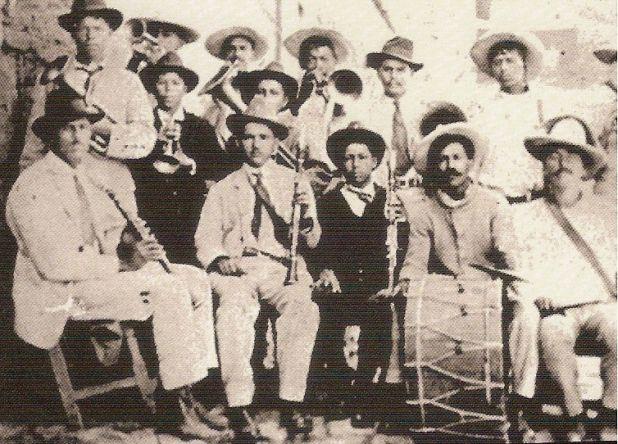
Banda sinaloense: a wind-band musical tradition
Wind-band music with documented roots in rural nineteenth-century Sinaloa, which a century later became, in the United States, an unprecedented commercial phenomenon.
 History
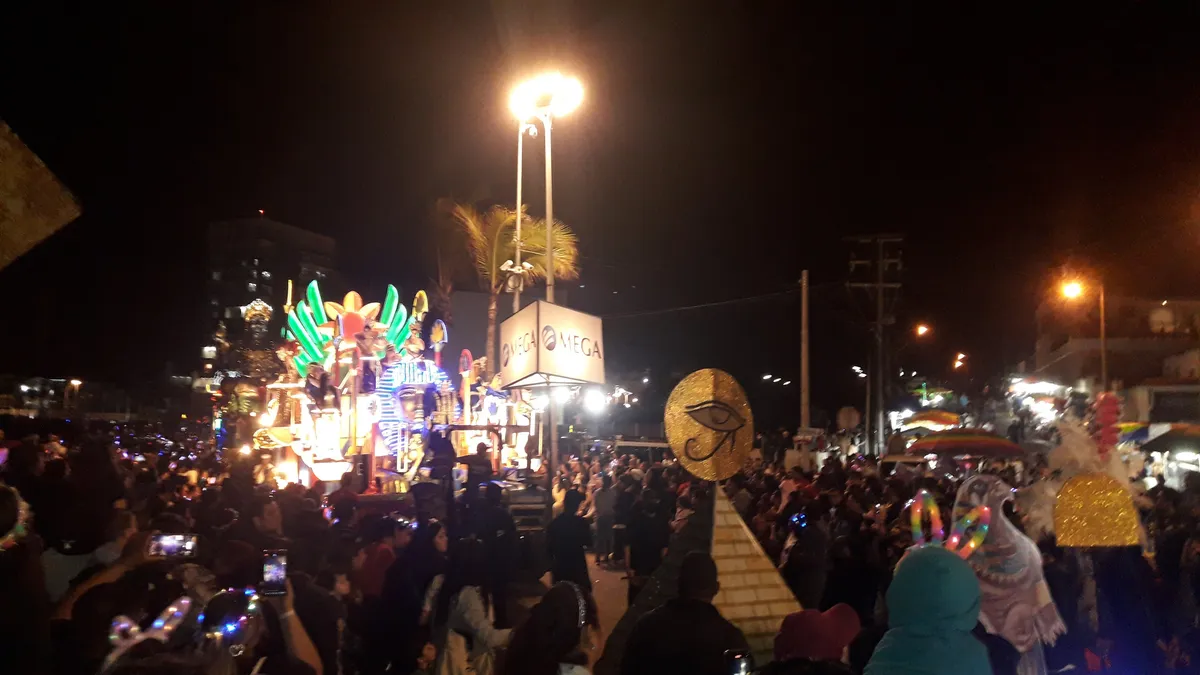
The Carnival of Mazatlán: over a century of history
From a soldiers' protest that turned into a celebration in 1827 to the committee that first organized it in 1898, the Carnival of Mazatlán is, according to Mexico's Secretaría de Cultura, the oldest formally organized carnival in the country.
- History
Pedro Infante: from Mazatlán to Guamúchil
Before becoming an icon of Mexican film and ranchera song, Pedro Infante was a boy from Mazatlán who came of age in Guamúchil — where he learned a trade, joined his first orchestra, and took the earliest steps toward the music that would make him famous.
Sources and data
The figures on this page come from public sources. Each data point shows its year and origin.
- Censo de Población y Vivienda 2020 — Principales resultados por localidad (ITER), Sinaloa — Instituto Nacional de Estadística y Geografía
- Panorama sociodemográfico de Sinaloa. Censo de Población y Vivienda 2020 — Instituto Nacional de Estadística y Geografía
- Enciclopedia de los Municipios y Delegaciones de México — Estado de Sinaloa — Instituto Nacional para el Federalismo y el Desarrollo Municipal (SEGOB)
- Decreto por el que se declara una zona de monumentos históricos en la ciudad y puerto de Mazatlán, municipio del mismo nombre, Estado de Sinaloa — Diario Oficial de la Federación